

the most efficient rocket ever designed

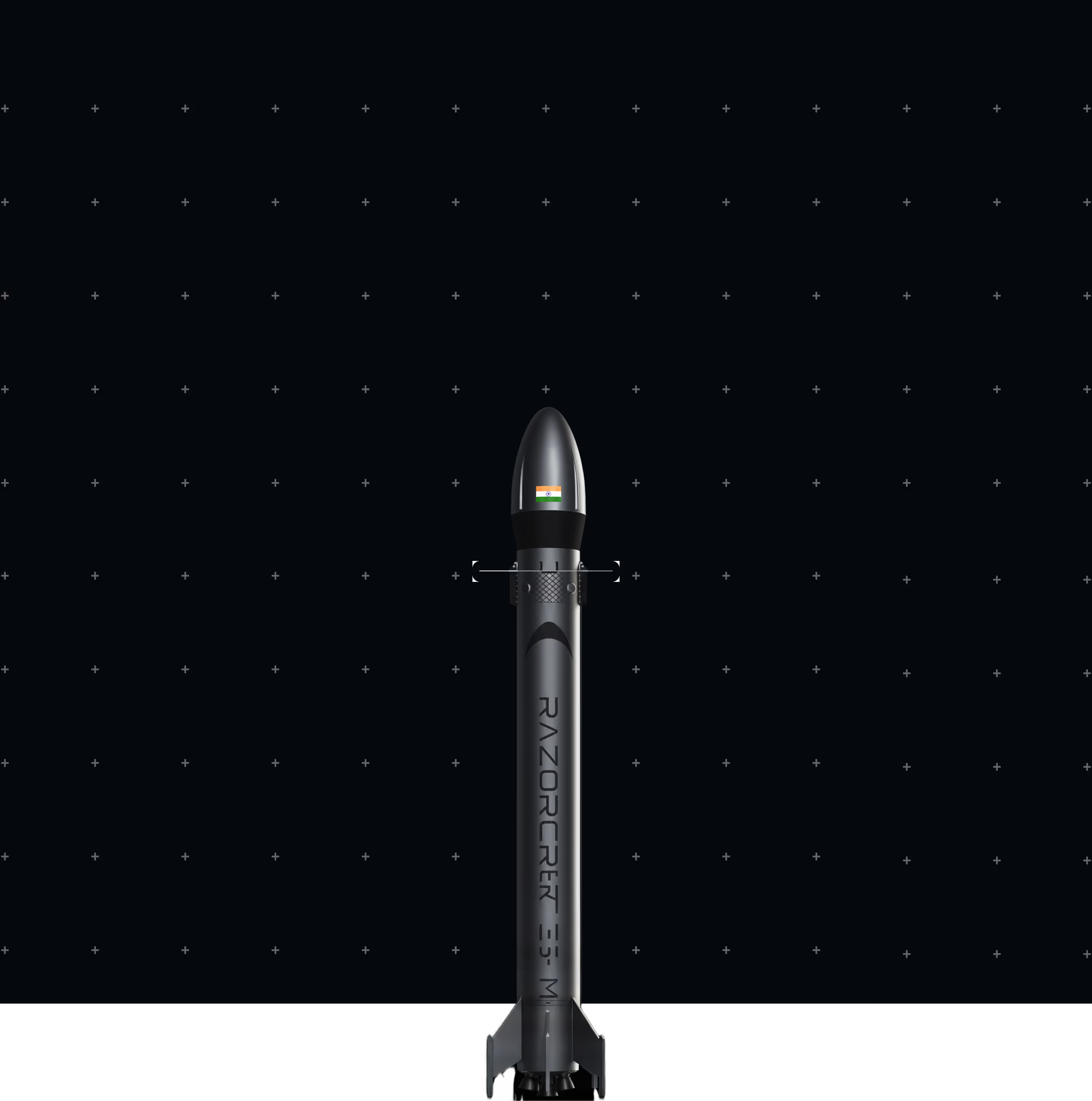
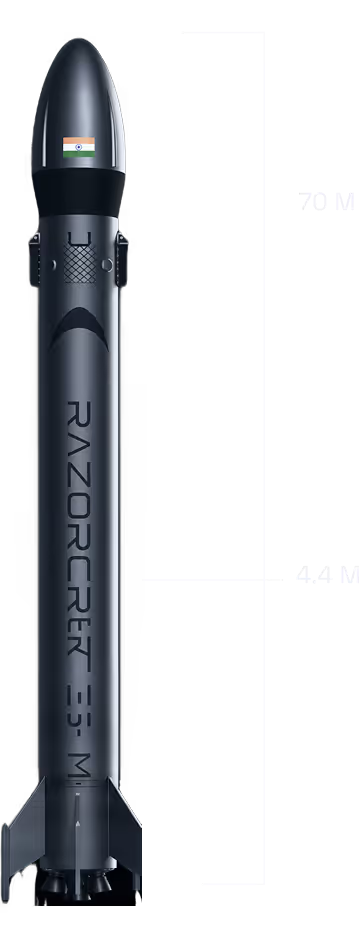
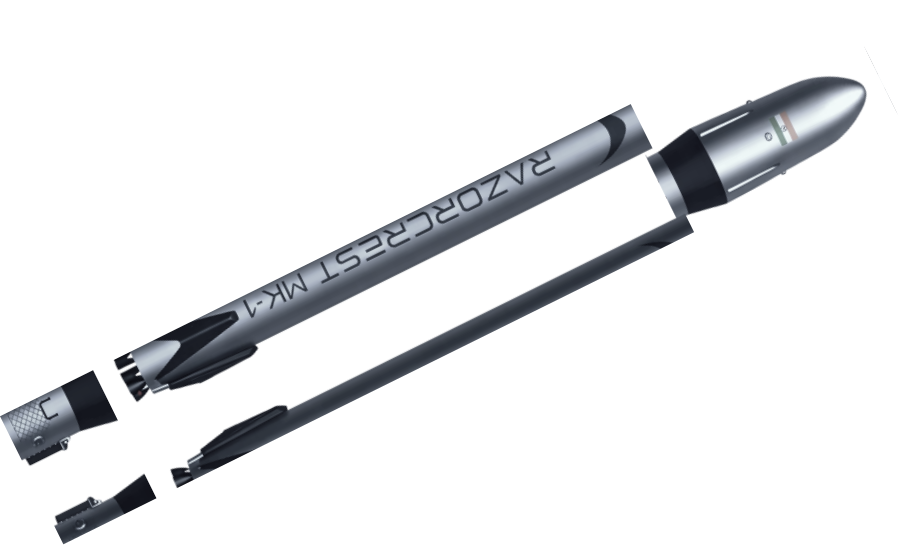
Razor Crest Mk-1

Razor Crest Mk-1

Launch Capability by Orbit(s):
Expendable
Configuration
LEO: 24.8 Tonnes
GTO: 10.8 Tonnes
TLI: 6.8 Tonnes
Fully Reusable
Configuration
LEO: 8 Tonnes
GTO: 1.6 Tonnes
Partially Reusable
Configuration
LEO: 22.8 Tonnes
GTO: 8.3 Tonnes
TLI: 4.2 Tonnes
the most efficient rocket ever designed
A proprietary rocket engine feed-cycle / propulsion system that enables the redirection of the re-entry heat throughout the re-entry phase of the upper stage.

Razor Crest Mk-1

Full reusability
With powered first-stage return and a recoverable upper stage, the vehicle delivers full two-stage reusability, turning launch into repeatable, high-frequency orbital access with lower cost and faster deployment cycles

Pegasus

Launch Capability by Orbit(s):
Thrust (tca)
40 kN
Thrust (engine)
80 kN
ISP (Sea Level)
293 s
fuel
RP-1/LOX
feed cycle
Full Flow Cooling Cycle (FSCC) Proprietary Cycle
engine used in
Upper Stage
Propulsion
the Pegasus upper-stage engine, engineered for high efficiency, deep throttling control, and stable performance through ascent and orbital insertion

Stallion

Launch Capability by Orbit(s):
Thrust (engine)
1.2 MN (1200 kN)
ISP (Sea Level)
293 s
ISP (vacuum )
323 s
fuel
RP-1/LOX
feed cycle
Gas Generator
engine used in
Booster Stage
Propulsion
The propulsion system is built on an RP-1 and liquid oxygen architecture, driven by the Stallion first-stage engine

Core Launch Technologies

Autonomous
Guidance & Navigation

The propulsion system is built on an RP-1 and liquid oxygen architecture, driven by the Stallion first-stage engine and the Pegasus upper-stage engine,

Reusable Propulsion Systems

High-performance engines designed for multiple missions, maintaining efficiency, reliability, and structural integrity across repeated flight cycles.

Powered Landing Control

Active thrust modulation enables controlled descent and pinpoint landings, ensuring vehicle recovery with minimal refurbishment requirements.

Structural, Thermal & Acoustic Protection

Advanced materials and shielding protect the vehicle against extreme loads, heat, and acoustic stress throughout ascent and reentry.

Multi-Orbit Deployment Capability

Single missions support precise payload delivery across multiple orbital regimes, maximizing mission flexibility and launch efficiency.

Rapid Turnaround Architecture

Vehicle systems engineered for fast inspection, servicing, and redeployment, enabling high launch cadence and operational scalability.

Indigenously developed Semi-Cryogenic Engines powering our rocket

Pegasus

India’s first reusable rocket engine, and India’s first bi-propellant-cooled engine.

Thrust (TCA):

40kN

Thrust (Engine):

80kN

Feed Cycle:

Full-flow Segregated Cooling Cycle (FSCC)

Engine Used In:

Upper Stage

Stallion

The world’s most powerful semi-cryogenic reusable rocket engine.

Thrust (TCA):

1.2MN (1,200kN)

Fuel

RP-1/LOX

Feed Cycle:

Gas Generator

Engine Used In:

Booster Stage

EDGE

competitive

Scalability

Economics

Flexibility

Cadence

01

Payload-class launch vehicles constrain mission design and affordability. Medium-lift capacity aligns with rapidly increasing constellation spacecraft mass (400–800 kg), making it the only viable deployment class for modern commercial, defence, and national programs.

02

Full two-stage reusability, fast turnaround, and in-house propulsion dramatically reduce launch costs—enabling affordable, frequent access to space without legacy expendable price penalties.

03

RCM1’s upper stage enables up to 16 discrete orbit insertions per mission, eliminating long wait times and allowing cost-effective dedicated launches without needing payload aggregation.

04

eusable architecture and rapid refurbishment support high flight rates, delivering reliable, predictable launch access while sustaining affordability across repeated missions.

One vehicle

Infinite

orbits &

Zero waste

SIGN UP FOR UPDATES

sign up

Thank you! Your submission has been received!
Oops! Something went wrong while submitting the form.